This document is a base, comprehensive account of OLI Integrative Psychodynamic Psychotherapy (hereinafter OLI IPP), written from the perspective of an independent reviewer. Its aim is not promotion but an objective presentation of the modality: what it is, where it comes from, what it rests on, how it differs from related approaches, what place it occupies on the contemporary psychotherapy scene, what it brings that is new, and which questions remain open.
The text draws on primary sources: published books and articles by the author and associates, publicly available information about the institutions (OLI Centar, EAIPP), and independent professional reviews and publications. All claims about the method itself are derived from those sources; evaluations and comparisons represent the reviewer’s reading and are clearly marked as such.
1. The identity of the modality: what OLI IPP is
OLI Integrative Psychodynamic Psychotherapy is a contemporary, psychoanalytically grounded integrative modality with a pronounced developmental focus. It retains the fundamental psychoanalytic tenets — the motivated nature of behaviour, the role of the unconscious, the developmental perspective, the dynamics of defences, and the central importance of transference and countertransference — but adds to them a systematic, operationalised framework for developing mature emotional capacities (Jovanović, 2013; 2025). OLI IPP therefore does not abandon the psychoanalytic heritage but extends it toward explicit, teachable work on the functional capacities of the personality.
The name carries an epistemological thesis: the acronym OLI derives from the formula “Discovering Personal Truth” (Otkrivanje Lične Istine) through the removal of false information. The psyche is understood as a system in which “false information” — dysfunctional beliefs and the strategies built upon them — distorts the processing of experience; hence the metaphor of the OLI IPP method as a “psychological antivirus programme”.
The ultimate aim of therapy is developmental: the strengthening of the ego and the development of mature emotional competencies that enable a capacity for reciprocity, a more realistic perception of oneself and others, the regulation of affects, the bearing of frustration and ambivalence, decision-making, and the taking of initiative (Jovanović, 2024).
1.1. The ethical dimension: the concept of the “good person” and the two pillars of mental health
The modality is markedly ethically grounded. Mature mental health is not reduced to the absence of symptoms but is tied to the concept of the “good person” (Jovanović, 2013), to which the book Psychoanalysis and Psychotherapy as Education (Jovanović, 2026) is essentially devoted. Mental health rests on two pillars: an orientation toward truthfulness and living “on one’s own account, not at another’s expense” — reciprocity instead of the exploitation of the other. These pillars extend the very ethical foundations of the psychoanalytic method — truthfulness and respect for the autonomy of the other person.
2. Theoretical foundations and the principle of integration
Integration in OLI IPP is not an eclectic combining of techniques but an integration organised around a clear theoretical axis — the model of basic emotional competencies, derived from the four psychoanalytic psychologies (drive psychology, ego psychology, object relations psychology, and self psychology). Of particular significance is the reliance on ego psychology and its shift “from drive to function” (Hartmann, 1939/1964).
It is important to dispel a possible misunderstanding: in OLI IPP there is no reduction of the traditions to a single model. Contemporary psychoanalysts use the contributions of all the psychoanalytic psychologies in any case. What OLI IPP does is extraction — from those schools it draws out what are developmental achievements (mature capacities), and not defence mechanisms, and sets this up as a common denominator. The logic is developmental: just as there are developmental norms for children across domains, for the accomplishment of which children need developed basic tools, so OLI IPP recognises those tools in the basic emotional competencies; people come to therapy when they fail to accomplish the developmental tasks of their age.
3. The distinctive core: the eight basic emotional competencies
The most recognisable contribution of OLI IPP is the work on the basic emotional competencies — the “software” for processing emotions which, unlike defence mechanisms, does not distort reality. OLI IPP singles out eight competencies that build two complex capacities — to love and to work: neutralization (“the regulator”), mentalization (“the articulator”), object wholeness (“the glue”), object constancy (“the stabilizer”), ambivalence tolerance (“the director”), frustration tolerance (“the immune system”), will (“the engine”), and initiative (“the igniter”). The names of theorists in the literature indicate the tradition from which a given process is best illuminated, not a claim that the author “named” the competence.
Each competence is elaborated developmentally and diagnostically: OLI IPP offers tables of indicators of arrest and of mature expression on the behavioural, emotional, cognitive, and conative levels, so that the therapist obtains the client’s “zone of proximal development”.
3.1. The compositional model: how the complex capacities are built from the basic ones
The basic competencies are “lego bricks” from which more complex capacities are assembled (delay of gratification, self-regulation, the capacity to be alone, mature empathy), and out of these the most complex — the capacity to love and to work — with tolerance of existence at the top. For practice this is decisive: complex capacities cannot be developed directly (patience is composed of neutralization, object wholeness and object constancy, and frustration tolerance); one works on the basic bricks. The relationship is shown in Figure 1.
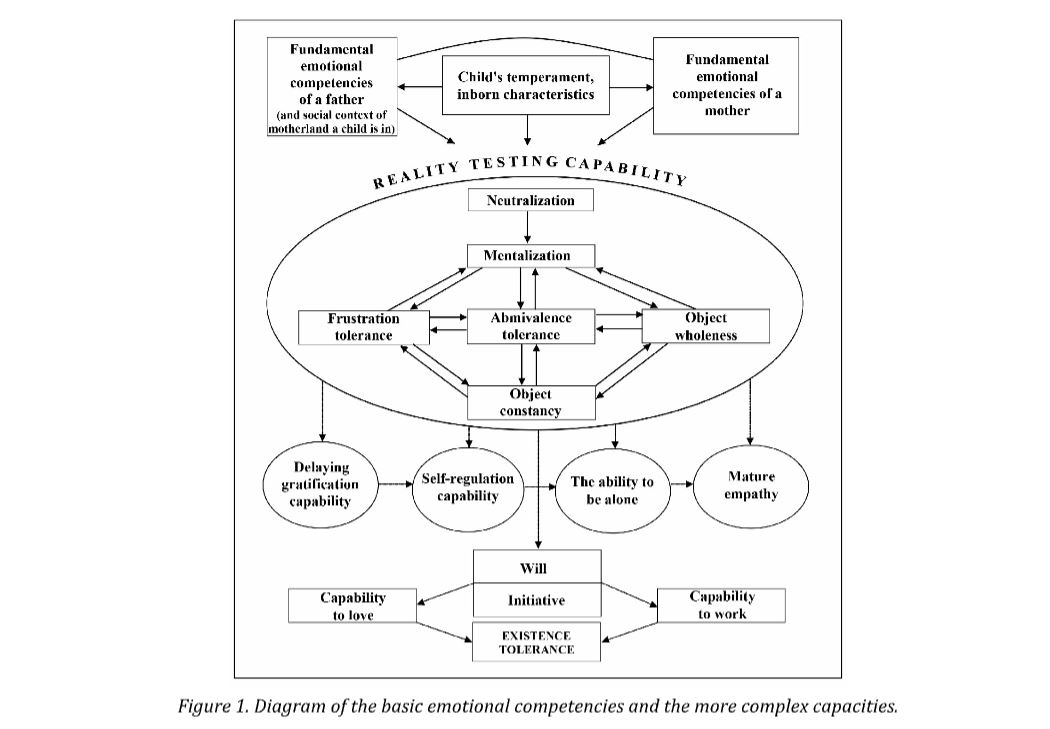
Figure 1. Diagram of the basic emotional competencies and the more complex capacities.
4. The clinical apparatus: how the modality works
4.1. Counter-skills and secondary gain
A counter-skill is the “negative” of a competence, but how it is understood matters: at a certain period of life it was adaptive — the best mode of adaptation the person had under the conditions of growing up — and at that time it was in fact a skill. The problem arises because the person unconsciously retains it even after the conditions have changed, without having developed more mature competencies. Secondary gain (Freud, 1917) and three additional reasons for resistance — neurotic pride (Horney, 1950), fear of losing oneself, and moral justification — explain why the system resists change. Hence the principle: a pattern cannot be taken away from a person until something better is offered in its place.
4.2. Two planes of work: content and process
The OLI IPP therapist works on the plane of content (story, relationships, history, transference) and on the plane of process (how the client processes emotions). The specificity comes to the fore on the process plane, through the “transfer of functions” — the therapist, as a temporary “auxiliary ego”, transmits to the client mature ways of processing emotions through declarative and procedural learning.
4.3. From diagnosis to treatment plan
The tables of arrest identify the deficient competence and the zone of proximal development; the PUNI model offers a strategy for understanding the system; the taxonomy of psychotherapeutic goals classifies techniques (including those from other approaches) according to the competence and phase they develop. Together this yields a clear, individualised plan. “Emotional accounting” moves resistance from unconscious opposition into the space of conscious choice (a systematic elaboration of techniques: Cmiljanović & Škorić, 2024).
4.4. Work with resistance and transference
Resistance is retained as a psychoanalytic concept but is broadened by a developmental reading (an indicator of insufficiently developed capacities). Transference is at once a site of repetition and of development. Here Winnicott’s concept of the “survival” of the therapist is important: the therapist withstands the client’s attacks while remaining a stable and benevolent object, so that the experience that the relationship survives despite destructiveness becomes developmental.
4.5. The PUNI model and the two cycles
The PUNI model (Needs–Beliefs–Ways–Outcomes) is a metamodel of clinical thinking with two cycles. In the first phase of work the dysfunctional cycle is resolved (reading backwards, bringing the counter-skills and secondary gain into awareness); in the second the developmental cycle is set in motion, in which counter-skills are replaced by mature competencies. The model distinguishes the universal need from the developmentally variable way of its desired satisfaction (Figure 2).
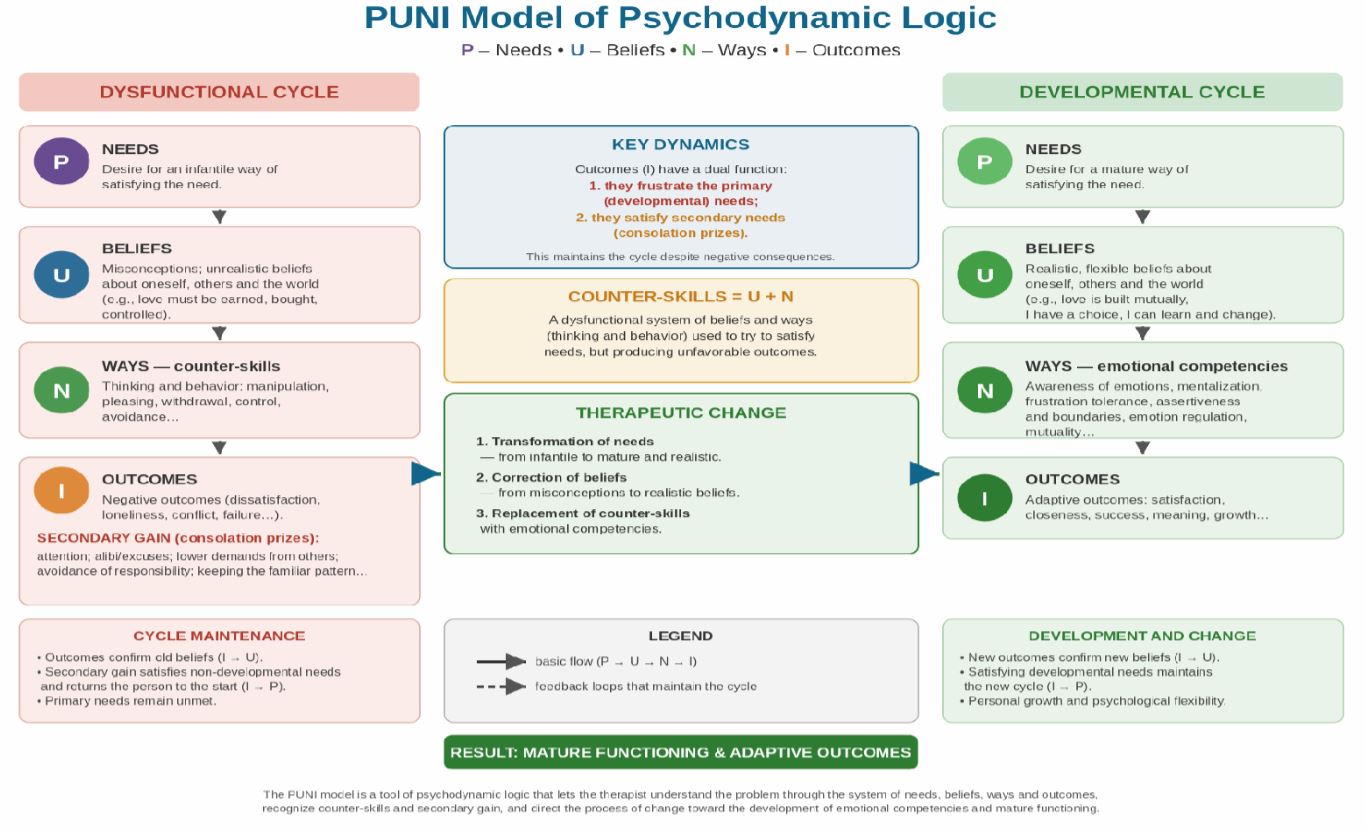
Figure 2. The PUNI model of psychodynamic logic — the dysfunctional and the developmental cycle.
5. The theory of change
The theory of change brings together a psychoanalytic understanding (developmental genesis, transference, resistance), the ego-psychological shift from content to process, and an original contribution — the operationalisation of change as the development of named emotional competencies. OLI IPP also sets out this theory as a distinct, explicitly formulated model (Jovanović & Jovanović, 2026, Insights 3): the competencies are the “operative carriers” of change, connected with work on transference, resistance, and the “transfer of functions”, while outcomes are defined as the capacity to love, to work, and tolerance of existence. Change is measured not only by insight but by the degree to which the client tolerates emotions, makes decisions, and functions more autonomously; a rapid change of symptoms without working through deeper levels is regarded as an “illusion of change”.
6. Positioning in relation to related approaches
The comparisons represent a reviewer’s reading of convergences and differences. With psychoanalysis, OLI IPP shares the assumptions about the unconscious, transference, and development, and differs by its explicit work on ego capacities and the more active role of the therapist. With MBT (Bateman, Fonagy) it shares the importance of mentalization (one of the eight competencies in OLI IPP). With schema therapy (Young) it shares the idea of early patterns; the concept of the counter-skill is akin to “coping modes” but anchored in ego psychology. With TFP (Kernberg, Clarkin) it shares the work with splitting and integration; with self psychology (Kohut) the sensitivity to narcissistic needs and optimal frustration. In the field of integration, OLI IPP offers a substantive principle (the model of competencies) as a shared language. Because OLI IPP integrates mechanisms that these schools have empirically examined, their research constitutes convergent (component) evidence for the corresponding parts of OLI IPP as well (see the chapter on critical appraisal).
7. Its place on the world psychotherapy scene
OLI IPP is a modality with a clear institutional foothold and growing internationalisation. Training is delivered by a network of eight registered O.L.I. centres in seven countries (Serbia — Belgrade, Niš, Novi Sad; Bosnia and Herzegovina; Montenegro; North Macedonia; Russia; Spain; Ukraine), together with partner organisations in further countries (Argentina, France, Croatia, Mexico, Portugal). All organisations and centres are united in the European Association for Integrative Psychodynamic Psychotherapy (EAIPP) as the umbrella association of the modality, which publishes the journal Insights (Uvidi). To date, around 500 professionals have been trained, and some 450 trainees are currently in training in 30 groups.
The training is accredited and aligned with the standards of UPSKS, the European Association for Counselling (EAC), and the European Association for Psychotherapy (EAP); it lasts 1,604 hours (4–5 years) and leads to national and European certificates. OLI IPP also has an elaborated Framework of Competencies aligned with the EAP standard “Core Competencies of a European Psychotherapist”.
The openness of the modality is attested in particular by the fact that, for a number of years now, OLI Centar has also been running an eight-month OLI IPP training intended for psychotherapists of other approaches; a large number of psychotherapists have attended it (family psychotherapy, Gestalt, transactional analysis, REBT, and others). The participants’ feedback is markedly positive: an understanding of the basic emotional competencies enriches their picture of the human being, their possibilities of work, treatment planning, and choice of techniques — and this within their home approach. OLI IPP thereby also functions as an integrative “additional language” that colleagues from other schools recognise as useful.
The modality and its parent association hold a range of recognitions: national — UPSKS/SAPCC and the section of the Serbian Psychological Society (DPS); European — through the European Association for Counselling (EACP), where EAIPP holds the status of a European Wide Accrediting Organisation (EWAO) and the O.L.I. Centre Serbia the status of an accredited training institute; and Russian-speaking — admission to the Pan-Russian Professional Psychotherapeutic League (OPPL) as an authorial modality and representation (a branch) of the Euro-Asian Confederation of Psychoanalytic Psychotherapy (EKPP) for Serbia and the Western Balkans. The modality is also included in the register of methods (modalities) recognised in the Russian Federation.
Internationalisation is further confirmed by publications and presentations beyond the home circle: three issues of the journal Insights (Uvidi), papers in Russian-language journals (Facets of Psychotherapy, 2023; Theory and Practice of Psychoanalysis, 2025), a presentation at the 23rd World Congress of Psychiatry (WPA, Vienna, 2023), and appearances at the EKPP summer schools and at the congress of the Association of Psychotherapy Associations of Bosnia and Herzegovina (SPUBIH, which holds NAO status with the EAP). A wider circle of authors publishes and presents on the modality, which points to a community rather than to the opus of a single author.
A realistic appraisal: OLI IPP is more than a local phenomenon — it has institutional recognition in the Serbian, European (EACP/EAIPP), and Russian-speaking (OPPL, EKPP) spheres, an established training network in several countries, and an extensive body of work. What remains as the next step for now is a wider presence in leading international peer-reviewed journals in English and independent empirical outcome studies — which is an attainable, not an essential, shortcoming.
8. Existing independent reviews and publications
On the occasion of admission to OPPL (2022), the modality was reviewed by several independent experts of different orientations — Serbina (process-oriented psychotherapy), Karafa-Korbut (katathym-imaginative, IPP Potsdam supervisor), Zedgenizova (psychiatrist, psychoanalyst), and Surina (Jungian analysis) — and all the reviews unanimously recommend acceptance, converging in their assessment of novelty, scientific grounding, comprehensiveness, and topicality. The agreement of reviewers from different schools reduces the risk of bias within a single tradition.
Besides the reviews, the modality is documented through a growing corpus of publications and presentations: the journal Insights (Uvidi) — three issues (2024–2026) with papers by several authors (Jovanović, Jovanović S., Rudec, Stevanović, Civrić, Pejović, Ovuka, Cvetković, Savić, Trbojević Jocić); books (Jovanović, 2013; 2025; 2026; Jovanović & Jovanović, 2026 — Resistance and Transference; Cmiljanović & Škorić, 2024) and a monograph on lifelong development (Petrović & Trbojević Jocić, 2025); Russian-language publications and inclusion in the RF register of modalities; and presentations at international gatherings (WPA, Vienna, 2023; EKPP summer schools; SPUBIH congress, 2023).
A reviewer’s note: these reviews and publications are valuable evidence, but they are in part gathered within the home and partner associations. For further positioning it would be worthwhile to secure reviews and accounts in peer-reviewed journals outside the circle of associates — for which this document should serve as a foundation.
9. What OLI IPP brings that is new
Original contributions: the model of eight basic emotional competencies as mature ego capacities; the compositional model of complex capacities; the concept of the counter-skill as a former skill that has “got stuck”; the taxonomy of psychotherapeutic goals; the two planes of work and the “transfer of functions”; “emotional accounting”; and the PUNI model with two cycles. To these are added the elaborated Framework of Competencies aligned with the EAP standard, the explicitly formulated theory of change (Insights 3), and more recent conceptual contributions: “vertical unconsciousness” and new defence mechanisms (Jovanović, 2024) and a typology of eight kinds of panic attack tied to the arrest of a particular competence (Jovanović & Rudec, 2024). The common denominator is a shift of emphasis — from the interpretation of content toward the systematic development of capacities — with a clear ethical grounding.
10. Critical appraisal: strengths and open questions
Strengths
A coherent, ethically grounded principle of integration; high clinical and teaching usability (tables of arrest, taxonomy of goals, PUNI, Framework of Competencies aligned with the EAP); firm rootedness in the psychoanalytic traditions with a contemporary developmental emphasis; an extensive authorial body of work and an established international institutional and training infrastructure (a network of centres in seven countries, EWAO status with EACP, admission to OPPL, EKPP representation).
Open questions
Proprietary outcome studies. The main next step is the publication of outcome studies of OLI IPP as a whole. At the same time, the very criteria of the leading associations acknowledge that, for psychotherapy as a human science, randomised studies are not always appropriate or necessary; clinical studies, process evaluation, and peer-reviewed papers also count as valid evidence. OLI IPP already has beginnings (the MOP-OLI instrument; Petrović, Jovanović & Trbojević, 2015; a scale for the eight competencies under development) and academic capacity in the team.
The most important development on this front is that the proprietary instrument — the OLI Test of Emotional Competencies — has moved from the stage of construction to empirical verification. A pilot study on 222 participants (189 items) demonstrated high reliability of all eight subscales (Cronbach’s α .81–.94) and, most significantly in theoretical terms, a hierarchical structure in which a single general factor explains 64.4% of the variance among the competencies (bifactor ω_h = .89; ECV = .58). The very architecture of the model is thereby empirically corroborated: a general capacity, which can be operationalised as psychological maturity, is superordinate to the capacities to love and to work, while each subscale retains clinically informative specific variance. On the basis of the pilot, a large validation study has been defined (a sample of ≥ 900, exploratory and confirmatory factor analysis of three competing models, a test of measurement invariance by sex and age, preliminary norms) along with the inclusion of the instrument in a cohort outcome study using internationally recognised measures (Miletić, 2025). Thus what could earlier be seen as a “lack of proprietary validation” is passing into a research programme under way.
Convergent evidence. Where OLI IPP integrates the mechanisms of other schools, the research of those schools constitutes independent support for the corresponding components — which changes the picture of a “lack of validation”. Specifically, by competence: mentalization is supported by studies of mentalization-based treatment (MBT; Bateman & Fonagy, 2009); frustration tolerance — by rational-emotive and dialectical-behaviour therapy (David et al., 2018); object wholeness — by transference-focused psychotherapy (Doering et al., 2010); ambivalence tolerance — by motivational interviewing (Rubak et al., 2005); initiative — by behavioural activation (Cuijpers et al., 2007); neutralization and affect regulation — by dialectical-behaviour therapy (Linehan, 1991); object constancy and will — by research on attachment, reflective functioning, and self-determination theory (Fonagy et al., 2002; Ryan & Deci, 2017).
Visibility in English and terminology. The greater part of the body of work is in Serbian (and Russian). Visibility in English is growing (an English edition of the theoretical-methodological manual; English issues of the journal Insights), but systematic translation and publication in indexed journals remain a priority, together with the consistent linking of vivid coinages with established terms.
11. Why OLI IPP is worth studying and reading
For researchers, OLI IPP is an example of integration with a clear substantive principle — a model of mature ego capacities around which knowledge is organised. For clinicians, the value lies in its operative quality: a structure that does not abolish psychodynamic depth but makes it usable in the real time of the session. For educators, the modality renders procedural clinical thinking declarative and teachable. For the wider public, OLI IPP is a rounded, ethically grounded authorial approach from the region that has already gained international institutional recognition and deserves serious, independent consideration.
References
Works from OLI IPP (author and associates)
Jovanović, N. (2013). Sposobnost za ljubav i rad [The Capacity to Love and to Work]: OLI Integrative Psychodynamic Psychotherapy. Belgrade: Beoknjiga.
Jovanović, N. (2024). Vertical Unconsciousness and New Defense Mechanisms. Insights (Uvidi) – Journal of the EAIPP, 1, 49–74.
Jovanović, N. & Rudec, M. (2024). Eight Types of Panic Attacks (Anxiety Disorder in OLI IPP). Insights (Uvidi) – Journal of the EAIPP, 1, 1–28.
Jovanović, N. & Stevanović, A. (2024). Transformations of the Superego in Contemporary Individuals. Insights (Uvidi) – Journal of the EAIPP, 1, 75–103.
Jovanović, N. (2025). Development of Basic Emotional Competencies in OLI Integrative Psychodynamic Psychotherapy. Amazon Kindle Direct Publishing.
Jovanović, N. (2026). Psihoanaliza i psihoterapija kao vaspitanje [Psychoanalysis and Psychotherapy as Education]. Belgrade: OLI Centar.
Jovanović, N. & Jovanović, S. (2026). Otpor i transfer u psihoanalizi i psihoterapiji [Resistance and Transference in Psychoanalysis and Psychotherapy]. Belgrade: OLI Centar.
Jovanović, N. & Jovanović, S. (2026, in press). Theory of Change in OLI IPP; the PUNI Model of Psychodynamic Logic. Insights (Uvidi), 3.
Jovanović, N. (2023). Working with basic emotional competencies in OLI IPP. Facets of Psychotherapy (Grani psihoterapii), 1(03). Moscow: AIPP. (in Russian)
Jovanović, N. (2025). OLI Integrative Psychodynamic Psychotherapy. Theory and Practice of Psychoanalysis: annual proceedings, 8. Rostov-on-Don: ECPP. (in Russian)
Cmiljanović, O. & Škorić, J. (2024). Psihoterapijske tehnike za razvoj bazičnih emocionalnih kompetencija [Psychotherapeutic techniques for developing basic emotional competencies]. Novi Sad.
Cvetković, M. (2025). The significance of transference and countertransference analysis in work with the borderline client (a case study). Aspekti psihoterapije, 1(2), 26–27. (in Serbian)
Petrović, J., Jovanović, N. & Trbojević, J. (2015). Psychometric properties and factor structure of the MOP-OLI questionnaire. Petnica.
Petrović, J. & Trbojević Jocić, J. (2025). Dodati život godinama [Adding Life to Years]: Development in Adulthood and Old Age. Belgrade: Sinapsa edicije.
Miletić, B. (2025). Pilot validation of the OLI Test of Emotional Competencies (internal research report). OLI Centar.
Independent reviews and presentations
Serbina, L. N.; Karafa-Korbut, N. O.; Zedgenizova, I. A.; Surina, L. A. (2022). Reviews of the authorial modality OLI IPP. OPPL, Moscow.
Bogdanovska Toskić, A. & Jovanović, N. (2023). An overview of a new integrative psychodynamic psychotherapeutic modality. 23rd World Congress of Psychiatry (WPA), Vienna. DOI: 10.13140/RG.2.2.19590.96322.
Jovanović, N. (2023). An approach to psychotherapy through the development of basic emotional competencies – OLI IPP. First Congress of Psychotherapists in BiH (SPUBIH), Sarajevo.
Selected general literature
Bateman, A. & Fonagy, P. (2009). Randomized controlled trial of outpatient MBT versus structured clinical management for BPD. American Journal of Psychiatry, 166(12), 1355–1364.
Cuijpers, P., van Straten, A. & Warmerdam, L. (2007). Behavioral activation treatments of depression: a meta-analysis. Clinical Psychology Review, 27(3), 318–326.
David, D. et al. (2018). 50 years of rational-emotive and cognitive-behavioral therapy: a systematic review and meta-analysis. Journal of Clinical Psychology, 74(3), 304–318.
Doering, S. et al. (2010). Transference-focused psychotherapy v. treatment by community psychotherapists for BPD. British Journal of Psychiatry, 196(5), 389–395.
Fonagy, P., Gergely, G., Jurist, E. L. & Target, M. (2002). Affect Regulation, Mentalization, and the Development of the Self. New York: Other Press.
Freud, A. (1936). The Ego and the Mechanisms of Defence. London: Hogarth Press.
Hartmann, H. (1939/1964). Ego Psychology and the Problem of Adaptation. New York: Int. Univ. Press.
Horney, K. (1950). Neurosis and Human Growth. New York: W. W. Norton.
Linehan, M. M. (1991). Cognitive-Behavioral Treatment of Borderline Personality Disorder. New York: Guilford Press.
Rubak, S. et al. (2005). Motivational interviewing: a systematic review and meta-analysis. British Journal of General Practice, 55(513), 305–312.
Ryan, R. M. & Deci, E. L. (2017). Self-Determination Theory. New York: Guilford Press.
Shedler, J. (2010). The efficacy of psychodynamic psychotherapy. American Psychologist, 65(2), 98–109.
Leichsenring, F. et al. (2023). The status of psychodynamic psychotherapy — an umbrella review. World Psychiatry, 22(2).
Winnicott, D. W. (1969). The use of an object. International Journal of Psycho-Analysis, 50, 711–716.
Internet sources
OLI Centar: https://olicentar.rs | EAIPP: https://eaipp.org | Personal website: https://nebojsajovanovic.com